Commercial Chiller Service in the GTA
Repair diagnostics, seasonal maintenance and upgrade planning for air-cooled and water-cooled chiller systems.
Commercial & industrial HVAC support across the Greater Toronto Area.
Call nowCooling-plant decisions begin with operating data
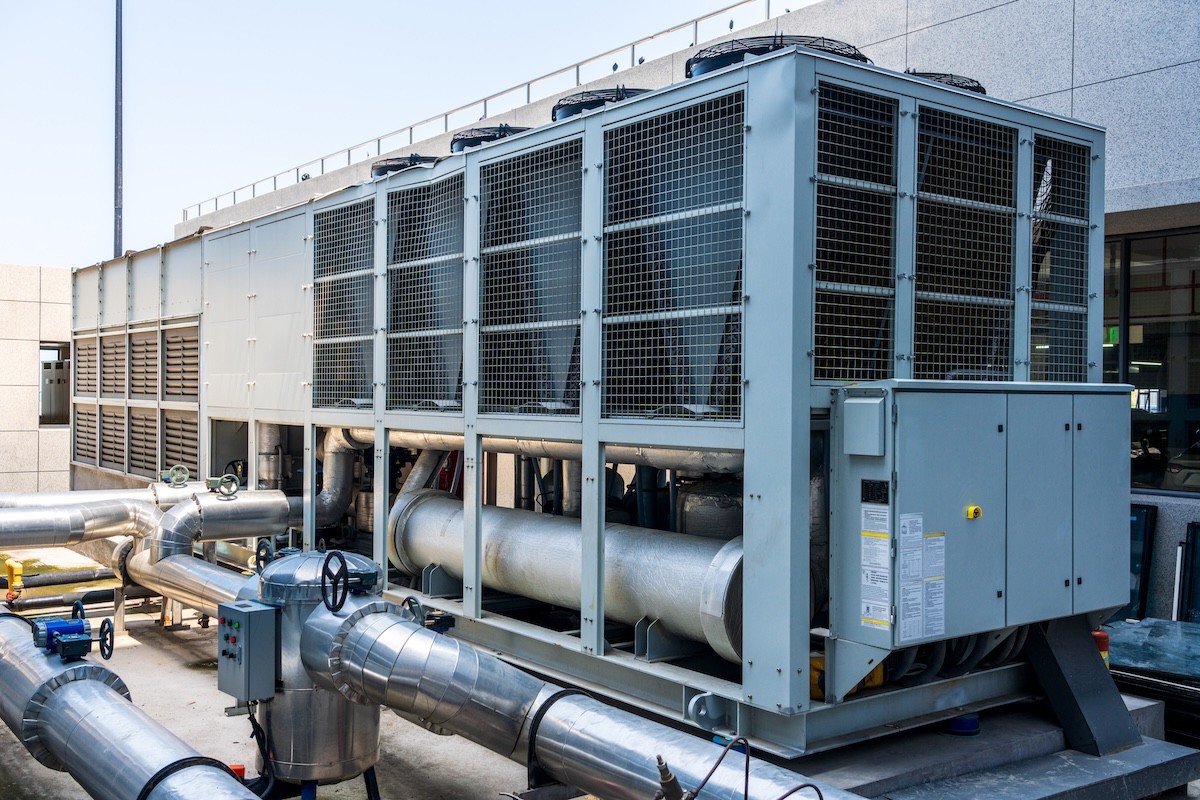
A chiller alarm or loss of capacity can point to refrigeration, electrical, water-flow, heat-transfer, sensor or control conditions. Sensible combines the reported problem with operating readings and the connected plant arrangement so facility teams receive a clear diagnosis rather than a one-component assumption.
Where this equipment is used
- Hospitals and healthcare facilities
- Universities, campuses and institutions
- Office towers, hotels and large retail
- Industrial and technology facilities
Signs you need chiller repair
- Unusual noise, vibration or elevated amp draw from the compressor
- Safeties tripping repeatedly, or an alarm history that keeps repeating
- Reduced capacity while pressures and flow read close to normal
- Chilled-water or condenser-water flow conditions outside their normal band
- Strainers or heat-transfer surfaces fouling faster than the service interval
- Control sequences that no longer stage the plant as designed
Signs you need chiller replacement
- A load profile the present plant can no longer follow
- Repairs recurring on the same circuit rather than resolving
- Refrigerant availability and cost changing the economics of a major repair
- Electrical, access or rigging constraints that limit what repair can achieve
- Heat-transfer performance that does not return after cleaning
- A building change that leaves the chiller mismatched to the load
Signs you need chiller preventative maintenance
- Operating trends and alarm history not reviewed between seasons
- No scheduled inspection of electrical, control and accessible mechanical components
- Water flow, strainers and heat-transfer surfaces with no defined check
- Start-up and shutdown carried out without a documented routine
- Corrective work planned without regard to facility demand
- Stable operating conditions never recorded, so drift cannot be spotted
Frequently asked
No. Canada's commitment under the Kigali Amendment is a phase-down of HFC supply, not a ban on equipment — existing machines keep running and no regulation requires replacement by a deadline. What changes is the maths on a major repair: as supply tightens, recharging an older machine costs more, so a failed compressor is a different decision than it was a few years ago.
The 2023 update to CSA B52 opened the door to A2L refrigerants in Canada, and most new commercial installations now use a refrigerant with a global warming potential of 700 or below. Which one suits your plant depends on the equipment, the mechanical room and the controls it has to integrate with.
Efficiency, before anything breaks. Rising energy use, longer run times to hold setpoint, or a small but steady climb in amp draw usually appear before the noise, vibration or safety trips do. That is the value of reviewing trends between visits rather than only responding to alarms.
ANSI/ASHRAE/ACCA Standard 180 prescribes inspection and maintenance tasks at defined frequencies for commercial chillers. Most GTA plants schedule around the cooling season, with the interval set by run hours, water quality, and how much redundancy the building has if the machine goes down.
Sometimes. It depends on plant redundancy, isolation capability and how much of the load can be shed. Where there is no standby capacity, the work has to be planned around facility demand and an agreed outage window rather than assumed.
Choose the support your equipment needs
Move from equipment information to the right service path without repeating technical detail on every page.
Repairs & Emergency Service
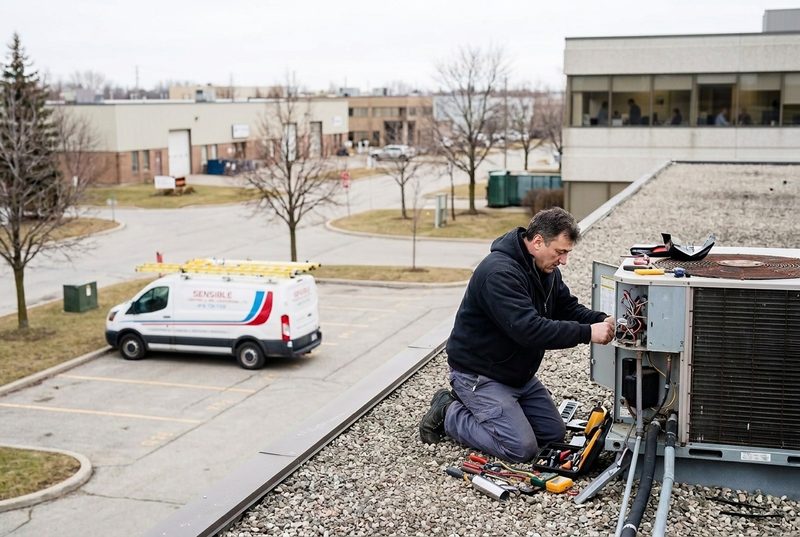
24/7 commercial HVAC support that starts with the fault, documents the findings and explains the recommended repair path.
View related service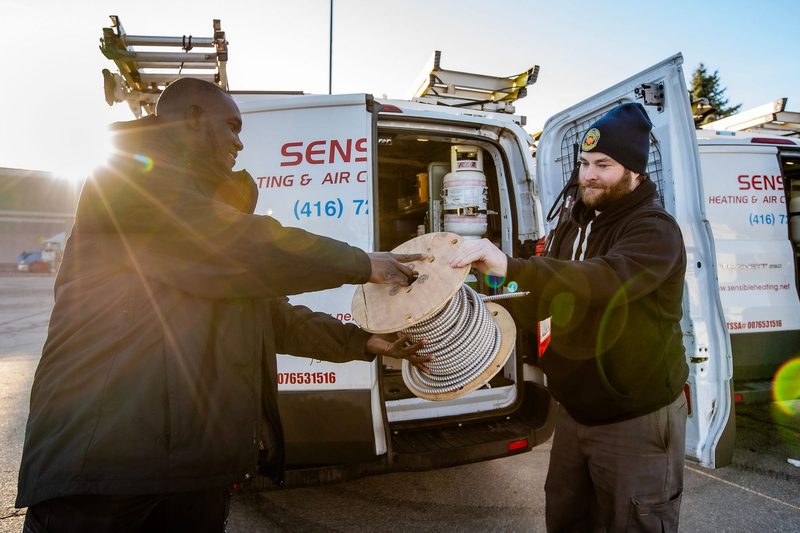
Installation & Retrofits
Building-specific installation and retrofit planning that considers equipment condition, load, controls, access and operating constraints.
View related service
Preventive Maintenance
Scheduled, equipment-aware maintenance that helps identify deterioration, support seasonal readiness and improve repair planning.
View related service